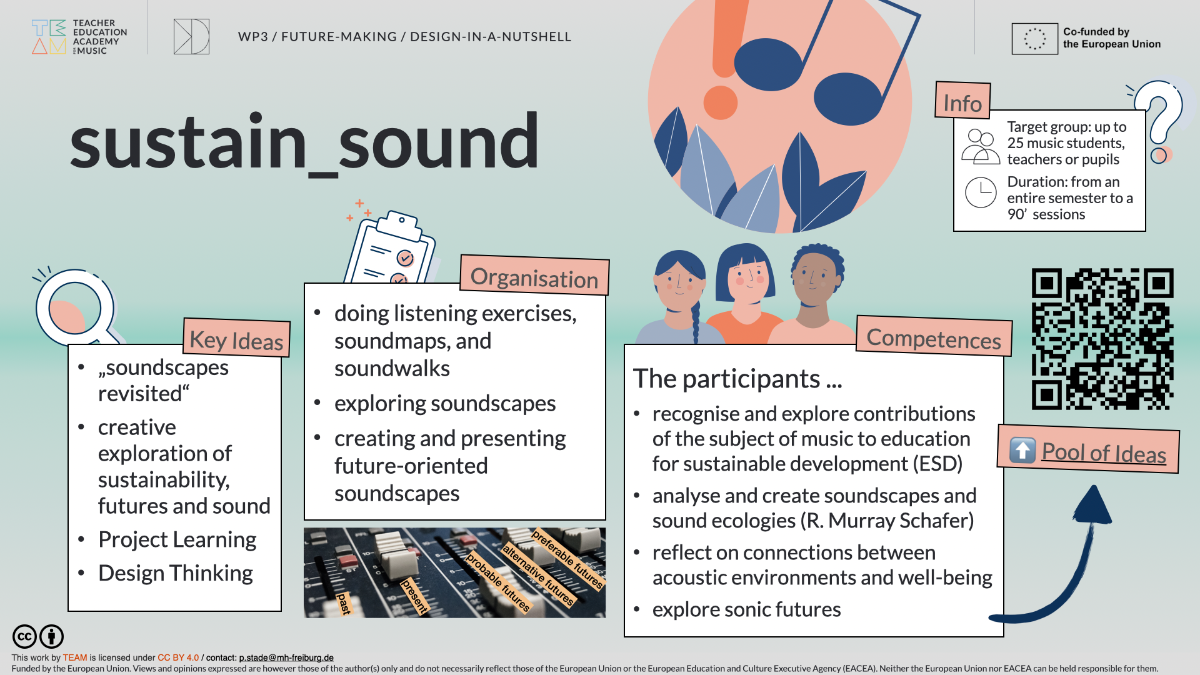
TEAM sustain_sound - Design in a nutshell CC-BY-4.0
sustain_sound
sustain_sound is a modular seminar and workshop by TEAM to explore how sound can help us think about sustainability, possible futures, and music education. Move through listening exercises, sound mapping, and the creative design of soundscapes as ways of reflecting on ecological change. Engage with ideas from acoustic ecology and building on the work of Hildegard Westerkamp, R. Murray Schafer, and Bernie Krause. Along the way, you will record, analyze, and reimagine the sounds of past, present, and potential futures, developing a more critical way of listening and discovering how sound itself can express and question sustainability within music education.
Module 1
Module 1: Introducing sustain_sound
Why should sustainability and future-oriented thinking be connected to music and music education? This introductory module explores the relationship between music, ecological responsibility, and visions of the future. It introduces and explains different key concepts of ecological music education and futures thinking, and examines how musical practices are embedded in social, cultural, and environmental contexts. The module encourages critical reflection on the role of music education in times of ecological and societal change.
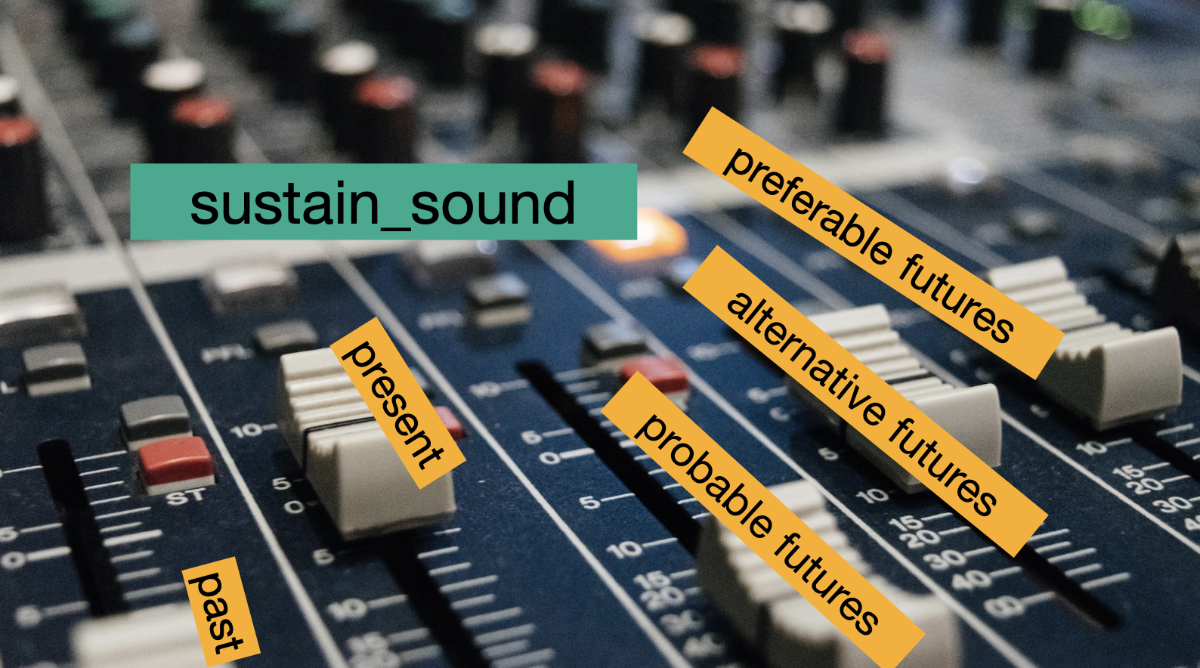

photos by Adam Acosta on Unsplash and by Matej Pribanic on Unsplash

photos by Lester on Unsplash and by Romeo Varga on Unsplash
Module 2
Module 2: Exploring and Listening to Soundscapes
This module introduces the concept of soundscapes and explores their relevance for musical, cultural, and ecological learning. Students examine different definitions of soundscapes and engage with key figures like Schafer, Krause and Westerkamp who have shaped the field, particularly within acoustic ecology. Through listening examples and practical exercises, participants learn how soundscapes can be documented and analyzed. The module also highlights how attentive listening to acoustic environments can foster ecological awareness and critical reflection on human interaction with sound environments.
Source: YouTube
Source: YouTube

H. Westerkamp with camel. © Photo: Peter Grant
Constellation podcast on Hildegard Westerkamp's Whisper Study - more information here
"Under the Flight Path" A sound document about life near the airport for 2-channel audio (1981) by Hildegard Westerkamp - Source
Vancouver Harbour Ambience produced by the World Soundscape Project, Simon Fraser University / directed and edited by R. Murray Schafer
Module 3
Module 3: Getting Creative with Sounds
This module focuses on creative approaches to working with sounds and sound compositions in the classroom. Students explore practical methods for listening to, collecting, and organizing sounds as a basis for musical creation. Using examples such as sound maps, sound walks, and recording-based compositions, the module introduces different ways of engaging with everyday and environmental sounds. Emphasis is placed on experimentation, collaborative processes, and reflective listening. It offers possibilities to develop ideas for translating these approaches into educational settings and adapting them to different age groups and learning contexts.
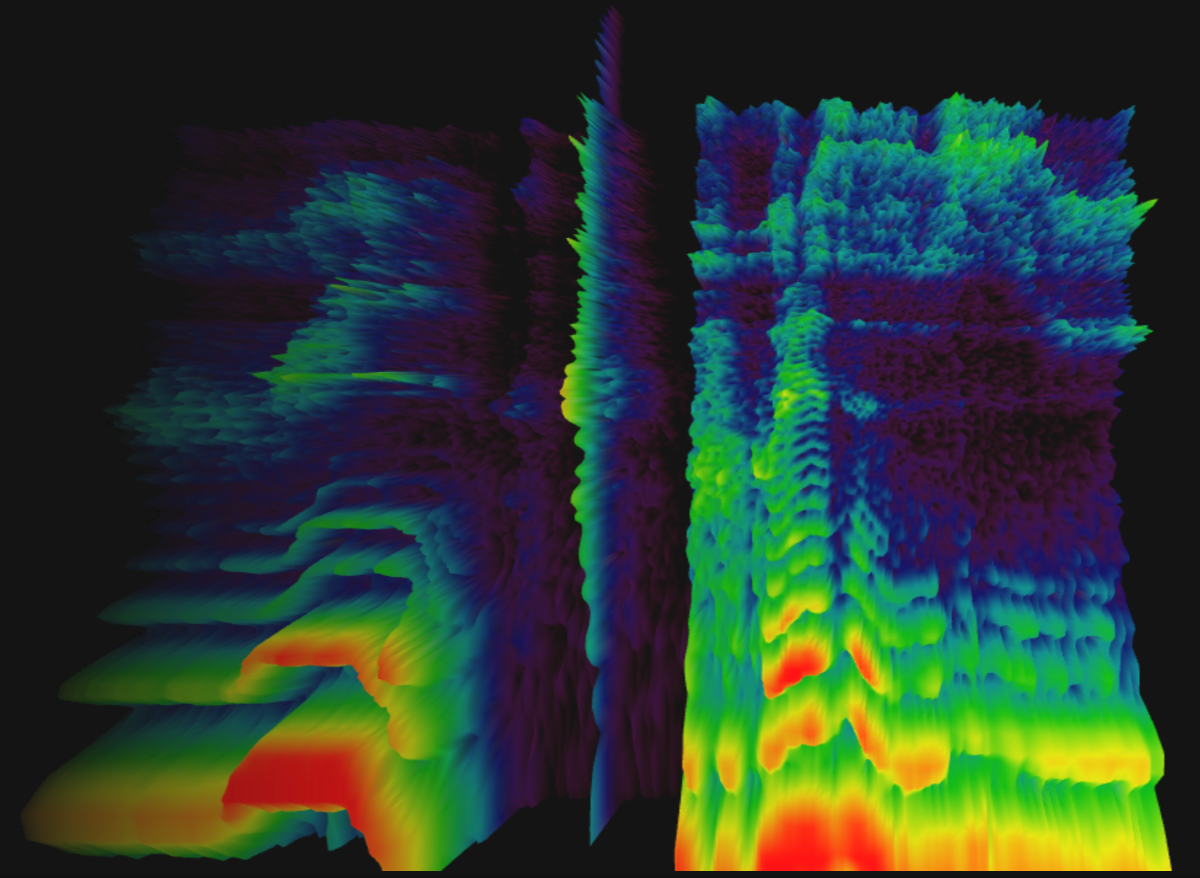
By Godfrey Reggio
Module 4
Module 4: Designing and Presenting Your Own Soundscapes
This module guides through the process of creating and presenting own soundscapes. Participants learn practical techniques for recording, editing, and organizing sounds, as well as strategies for structuring and presenting their compositions. Emphasis is placed on translating creative ideas into coherent auditory experiences that communicate meaning and engage listeners. Students also explore ways to provide constructive feedback and facilitate discussions around their peers’ soundscapes. The module encourages reflection on both artistic choices and educational potential, showing how soundscape creation can foster listening skills, creativity, and environmental awareness. By the end of the module, participants will be able to design, produce, and present soundscapes in educational or creative contexts.
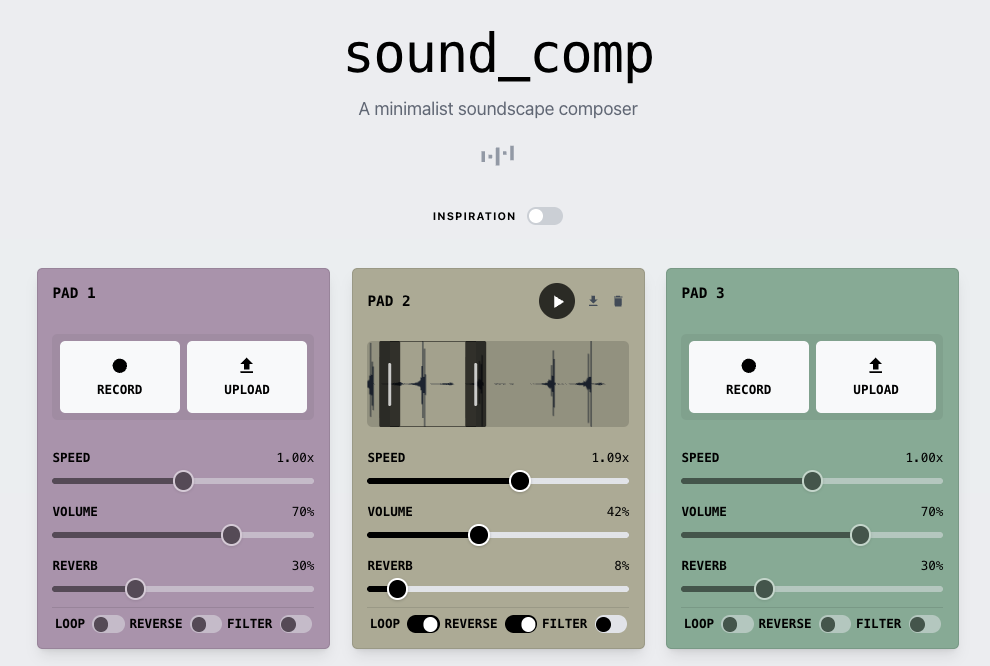
The app sound_comp - programmed by Philip Stade with Google AI Studio
License: CC-BY-4.0
Conceptualisation, Implementation, Evaluation & Re-design: Philip Stade, Eva-Maria Tralle, Jonas Völker & Johanna Klingenberg
Review & Editing: Thade Buchborn, Lina Van Dooren, Jonė Girdzijauskaitė-Pocienė, Anna Houmann, Elissavet Perakaki, Branka Rotar Pance, Michael Rumpeltes, Philip Stade & Lena Widdermann
Visualisation & OER Design: Philip Stade & Lena Widdermann
Contact: p.stade@mh-freiburg.de
